
Governor Whitmer, Mayor Neeley, and state officials celebrate completed lead service line replacement in Flint
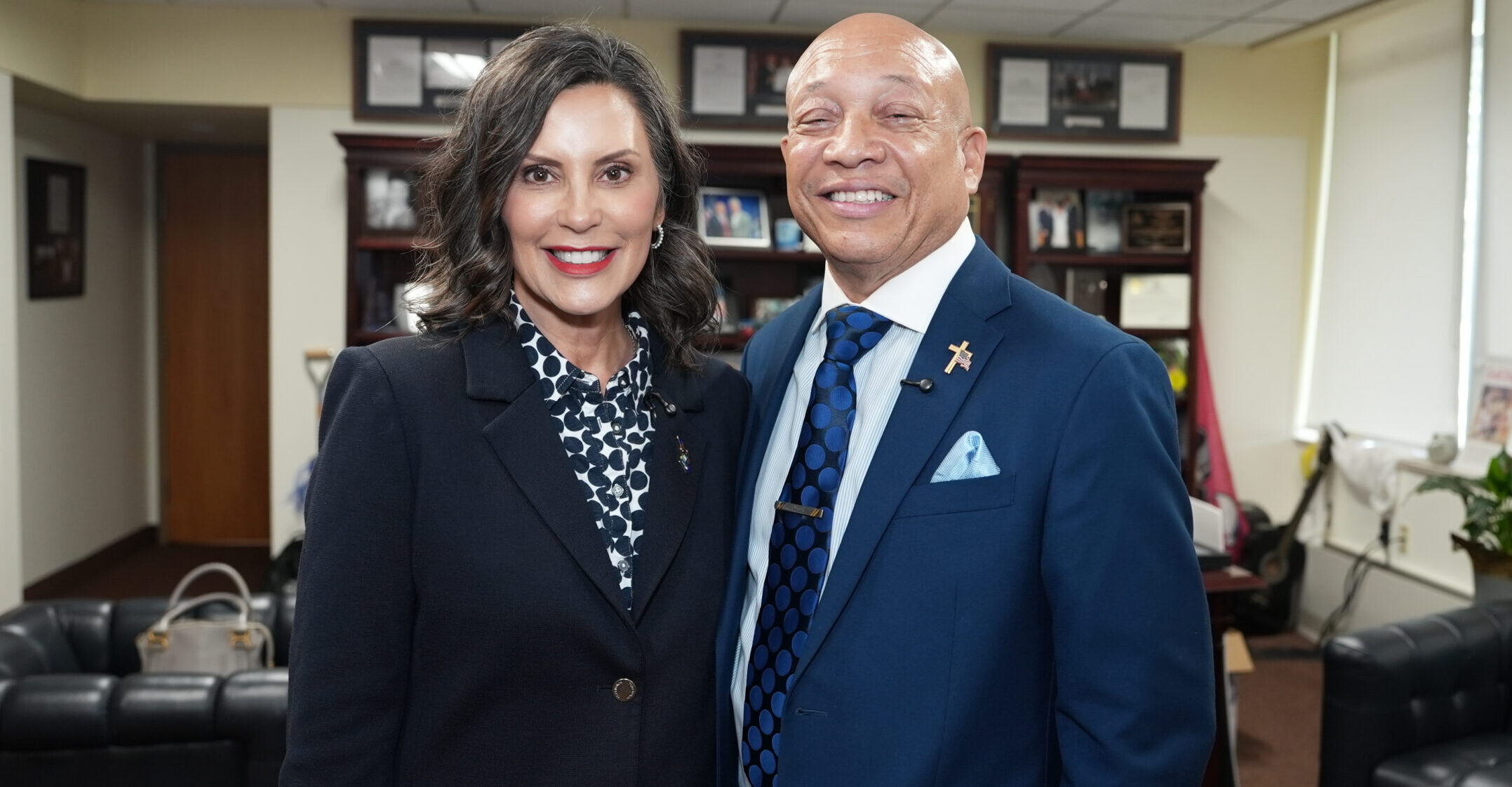
LANSING, Mich. — Governor Gretchen Whitmer joined Mayor Sheldon Neeley, and Michigan Department of Environment, Great Lakes, and Energy (EGLE) Director Phil Roos to celebrate the completion of the city’s work to replace all known lead service lines.
“Since my first day in office, making sure the people of Flint have safe, reliable drinking water has been a priority,” said Governor Whitmer. “Through strong partnership with the city, the state, and the many teams on the ground, we were able to complete the replacement of all known lead service lines. The goal of this work has been to provide what Flint residents deserve, a water system that meets the highest standards and supports the health and stability of the community.”
With the removal of last known active lead service line on July 31, 2026, roughly 11,600 lines have been replaced out of almost 32,000 properties excavated and checked for lead pipes during the roughly $140 million effort.
“Completing this work took years of steady effort, collaboration, and commitment across our community. I want to thank our partners at the state and more importantly, I want to recognize the people of Flint for their resilience and determination to see this through,” said Mayor Neeley. “This has been a difficult chapter, but by working together with optimism and a clear vision, we have finished a major task and continued moving Flint forward.”
The City of Flint has completed the project to remove and replace the roughly 500 additional lead service lines discovered during the completion of the NRDC/Concerned Pastors Settlement Agreement in July of 2025 that previously covered the removal and replacement of over 11,000 lead lines throughout the city.
“This milestone represents years of coordinated work, and EGLE is proud to have helped the City of Flint reach the completion of all known lead service line replacements. Ensuring safe, reliable drinking water for residents has been central to this effort,” said EGLE Director Phil Roos. “We look forward to our continued partnership with the City of Flint as remaining restoration work is completed.”
Flint has also reached a decade of compliance with state and federal standards for lead in drinking water as part of the ongoing inventory requirements of the state’s strict Lead and Copper Rule (LCR).
The latest six-month monitoring period from Jan. 1, 2026 through June 30, 2026 resulted in a 90th percentile calculation of 3 parts per billion (ppb) for lead. The 90th percentile calculation of 3 ppb means 90 percent of the test results used in the calculation came in at or below 3 ppb.
Since July 2016, the city of Flint’s water system has tested below action levels of the federal Lead and Copper Rule (LCR) including Michigan’s tighter 12 ppb standard that went into effect in 2025. The federal standard remains at 15 ppb.
The latest monitoring results were calculated using the highest value from either the 1st or 5th liter sample. The city collected samples from 61 validated sites. Included in the data set were 29 Tier 1 sites, known as single-family residences served by a lead service line, 19 Tier 2 sites, businesses served by a lead service line, and 13 Tier 3 sites or single-family residences with interior copper plumbing with lead solder installed before 1988.
Flint’s testing results can be found by visiting the State’s Flint Water website. Additional information about Michigan’s new testing requirements and results state-wide can be found at Mi Lead Safe.